Every Great Idea Starts as a Bad One
From the outset, Randolph challenged one of the biggest myths in business. Successful companies do not begin with perfect ideas. They begin with imperfect ones that are tested, challenged and refined.
In the early days of Netflix, many of the initial concepts seemed unrealistic, impractical or simply strange. But instead of waiting for the “perfect” idea, Randolph and his co-founder focused on experimentation.
The key was not getting it right the first time. It was being willing to start.
The Power of Testing, Not Guessing
One of the defining principles behind Netflix’s success was its commitment to testing ideas quickly and learning from the results.
Rather than relying on long-term planning or assumptions, Randolph emphasised the importance of taking action. Small experiments, rapid feedback and constant iteration allowed the business to evolve in real time.
This approach removed the fear of failure. When every idea is treated as a test, failure becomes part of the process rather than something to avoid.
When “That Will Never Work” Becomes the Signal
🎥 Watch the clip:
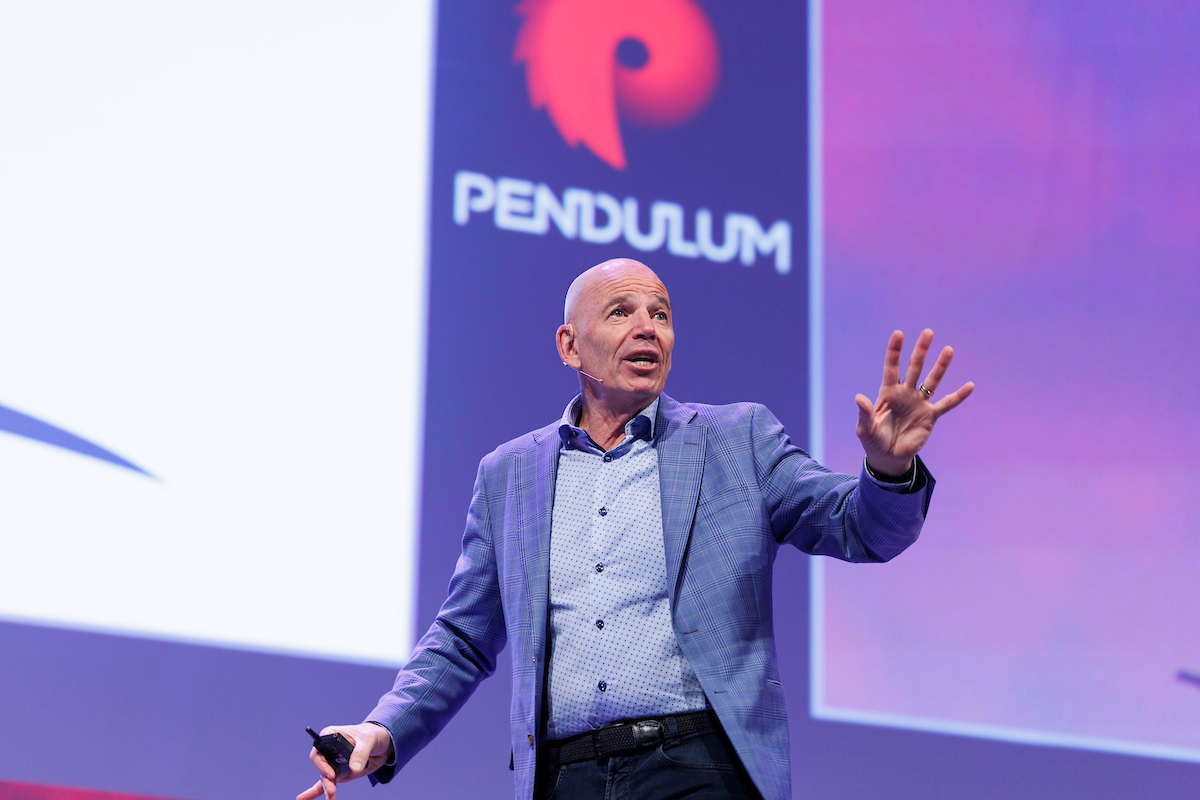
In the video above, Randolph shares one of the defining moments in Netflix’s early journey. Pitching the idea to Blockbuster, then the dominant force in home entertainment, he and Reed Hastings proposed a partnership that would combine physical stores with an online model.
It was a bold vision, backed by research and belief in where the market was heading.
But the response was not what they hoped for.
The idea was met with scepticism. The price they proposed was dismissed. What they saw as the future, others could not yet recognise.
And that moment captures one of the most important lessons from Randolph’s talk. The ideas that go on to change industries rarely feel obvious at the beginning. In fact, they often sound unrealistic, uncomfortable or simply wrong.
Rather than seeing rejection as a signal to stop, Randolph reframed it as part of the process. If an idea challenges existing thinking, it is far more likely to be dismissed before it is understood.
Innovation Comes from Persistence
Behind every breakthrough idea are countless moments where things do not work.
Randolph shared how many of Netflix’s early ideas were dismissed, rejected or simply did not succeed. But those moments were not setbacks. They were necessary steps in finding what did work.
Innovation is not a straight line. It is built through persistence, curiosity and the willingness to keep testing when outcomes are uncertain.
Building a Culture of Experimentation
Randolph also highlighted the importance of creating environments where ideas can be tested without fear.
Innovation does not come from rigid structures or excessive caution. It comes from giving people the freedom to try, to fail and to learn.
Leaders play a critical role in shaping this culture. By encouraging experimentation and removing the stigma around failure, organisations can unlock creativity and growth.
Key Takeaways from Marc Randolph’s Talk
- Great ideas rarely start perfect. They evolve through testing and iteration.
- Action beats overthinking. Progress comes from trying, not waiting.
- Failure is part of innovation. Each setback provides valuable insight.
- Persistence drives breakthroughs. Success comes from continuing when others stop.
- Culture shapes innovation. Teams need the freedom to experiment and learn.
A Defining Moment at Pendulum Summit
Marc Randolph’s session offered a powerful reminder that innovation is not reserved for a select few.
It is a process.
A process built on curiosity, experimentation and the courage to keep going when others doubt the idea.
His story reinforced a simple but important truth.
Every successful idea once sounded like it would never work.
To hear Marc’s full talk, visit https://pendulum-360.com/